We have compiled a list of manufacturers, distributors, product information, reference prices, and rankings for Hot Melt Molding.
ipros is IPROS GMS IPROS One of the largest technical database sites in Japan that collects information on.

Hot Melt Molding - List of Manufacturers, Suppliers, Companies and Products | IPROS GMS

Hot Melt Molding Product List

1~6 item / All 6 items

Displayed results

Hot Melt Molding Case Study: "Internal Wiring of Enclosures"

We solved the request to tidy up the internal wiring of the enclosure with hot melt molding!

Hot melt molding is a molding technology that involves injecting a solvent-free, one-component thermoplastic hot melt adhesive into a mold at low pressure. This method is widely used for purposes such as dustproofing, waterproofing, vibration resistance, shock resistance, insulation, and housing functionality. In this catalog, we introduce examples that address the desire to tidy up the internal wiring of small devices using hot melt molding technology. [Challenges] - Poor organization of internal wiring - When users open the housing for battery replacement, the appearance is not good [Benefits] - Fixing the harness in any shape with hot melt molding *For more details, please refer to the catalog or feel free to contact us.

  • Processing Contract
  • Other electronic parts
  • Coating Agent
  • Hot Melt Molding

Added to bookmarks

Bookmarks list

Bookmark has been removed

Bookmarks list

You can't add any more bookmarks

By registering as a member, you can increase the number of bookmarks you can save and organize them with labels.

Free membership registration

Expanding adoption in various fields! Hot melt molding

A sealing method that can simultaneously achieve "tact reduction," "reduction in the number of parts," and "miniaturization"! The optimal hot melt molding for waterproof sealing of electrical components.

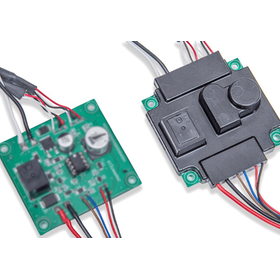
This is a next-generation sealing technology that imparts excellent environmental resistance, such as waterproofing and dustproofing, to various electronic components like circuit boards and sensors by low-pressure insert molding with hot melt thermoplastic adhesives. Compared to conventional methods like potting, it simultaneously achieves "shortened tact time," "reduced number of components," "miniaturization and weight reduction," and "lower defect rates," leading to its expanding adoption in various fields as a next-generation sealing technology. 【Adoption Fields】 - Automotive interior and exterior electronic components for four-wheeled and two-wheeled vehicles - Interior and exterior electronic components for working vehicles such as agricultural and construction machinery - Electronic components for industrial equipment, FA devices, and robots - Electronic components for home appliances and consumer devices - Electronic components for infrastructure equipment - Electronic components for outdoor working machinery and power tools - Electronic components for communication devices like 5G and LPWA etc. 【Adoption Examples】 - Waterproof sealing of automotive interior and exterior electronic components (circuit boards, sensors, harnesses, switches, etc.) - Waterproof and dustproof sealing of electronic components in FA equipment (circuit boards, sensors, etc.) - Waterproof sealing of control boards for power tools - Sealing of industrial communication and IoT devices - Waterproof sealing of various sensors, such as gas sensors and angle sensors etc. The sealing technology is expanding its adoption in various fields as a replacement for potting!

  • Other polymer materials
  • Coating Agent
  • Other electronic parts
  • Hot Melt Molding

Added to bookmarks

Bookmarks list

Bookmark has been removed

Bookmarks list

You can't add any more bookmarks

By registering as a member, you can increase the number of bookmarks you can save and organize them with labels.

Free membership registration

Hot melt molding

Due to low temperature, low pressure, and low-speed molding, there is less stress on electronic components and printed circuit boards!

"Hot Melt Molding" is a molding technology using adhesive-based resins (polyamide, polyester, polyolefin). It is suitable for protecting substrates and electronic components using one-component thermoplastic resins. Due to its high adhesive strength, it excels in waterproofing, drip-proofing, and dust-proofing, and the molds can be smaller, which helps reduce initial costs. 【Features】 ■ Minimal stress on electronic components and printed circuit boards ■ Excellent waterproofing, drip-proofing, and dust-proofing due to high adhesive strength ■ Smaller molds help reduce initial costs ■ Resolves surface irregularities and void issues during potting *For more details, please refer to the PDF document or feel free to contact us.

  • Processing Contract
  • Hot Melt Molding

Added to bookmarks

Bookmarks list

Bookmark has been removed

Bookmarks list

You can't add any more bookmarks

By registering as a member, you can increase the number of bookmarks you can save and organize them with labels.

Free membership registration

Hot melt molding for waterproofing, dustproofing, and cost reduction of circuit boards.

"Complete sealing of electrical components in just a few dozen seconds. Ideal for waterproofing, dustproofing, and insulation!" Hot melt molding is gaining attention for the waterproof sealing of electrical components.

"Complete sealing of electronic components in just a few dozen seconds. Ideal for waterproofing, dustproofing, and insulation!" Hot melt molding, which is gaining attention for waterproof sealing of electronic components, utilizes thermoplastic adhesives in low-pressure insert molding to achieve environmental protection such as waterproofing and dustproofing for electronic components like mounted circuit boards. Compared to traditional two-component potting and conformal coating, sealing is completed in an extremely short time, leading to an expansion in its adoption as a sealing technology. We propose a sustainable hot melt made primarily from natural fatty acids. At the Matsumoto Processing Lab, nine hot melt molding machines are installed, and you can observe the actual process of hot melt sealing electronic components. Customers interested in visiting are encouraged to inquire.

  • plastic
  • Coating Agent
  • Other electronic parts
  • Hot Melt Molding

Added to bookmarks

Bookmarks list

Bookmark has been removed

Bookmarks list

You can't add any more bookmarks

By registering as a member, you can increase the number of bookmarks you can save and organize them with labels.

Free membership registration

[For Waterproofing Circuit Boards!] Technical Document: Introduction to Hot Melt Molding

Hot melt molding, which is gaining attention as a waterproof sealing method alternative to potting. Sealing is completed in just a few dozen seconds per cycle. Contributes to cost reduction!

Complete sealing of electronic components in just a few dozen seconds. Ideal for waterproofing, dustproofing, and insulation! Hot melt molding is gaining attention as a waterproof technology for circuit boards. What is hot melt molding? How is it different from potting? What is the process for implementation? We will answer these questions. In recent years, hot melt molding has been increasingly adopted in various fields such as automotive electronic components, mobile devices, home electronics, and IoT devices as a waterproofing method to replace potting, contributing to improved productivity and cost reduction.

  • plastic
  • Coating Agent
  • Other electronic parts
  • Hot Melt Molding

Added to bookmarks

Bookmarks list

Bookmark has been removed

Bookmarks list

You can't add any more bookmarks

By registering as a member, you can increase the number of bookmarks you can save and organize them with labels.

Free membership registration

Hot Melt Molding Case Study: "Waterproof Connector"

Introduction to the hot melt molding method that completes 4 waterproof connectors in 30 seconds.

Hot melt molding is a molding technique that involves injecting a solvent-free, one-component thermoplastic hot melt adhesive into a mold at low pressure. This method is widely used for purposes such as dustproofing, waterproofing, vibration resistance, impact resistance, insulation, and housing functionality. In this catalog, we introduce examples of process improvement and value analysis through the switch from waterproof connector rubber bushings. [Challenge] We want to waterproof the wire insertion area. *For more details, please refer to the catalog or feel free to contact us.

  • Processing Contract
  • Coating Agent
  • Automotive Connectors
  • Hot Melt Molding

Added to bookmarks

Bookmarks list

Bookmark has been removed

Bookmarks list

You can't add any more bookmarks

By registering as a member, you can increase the number of bookmarks you can save and organize them with labels.

Free membership registration

Search Keywords Related to Hot Melt Molding